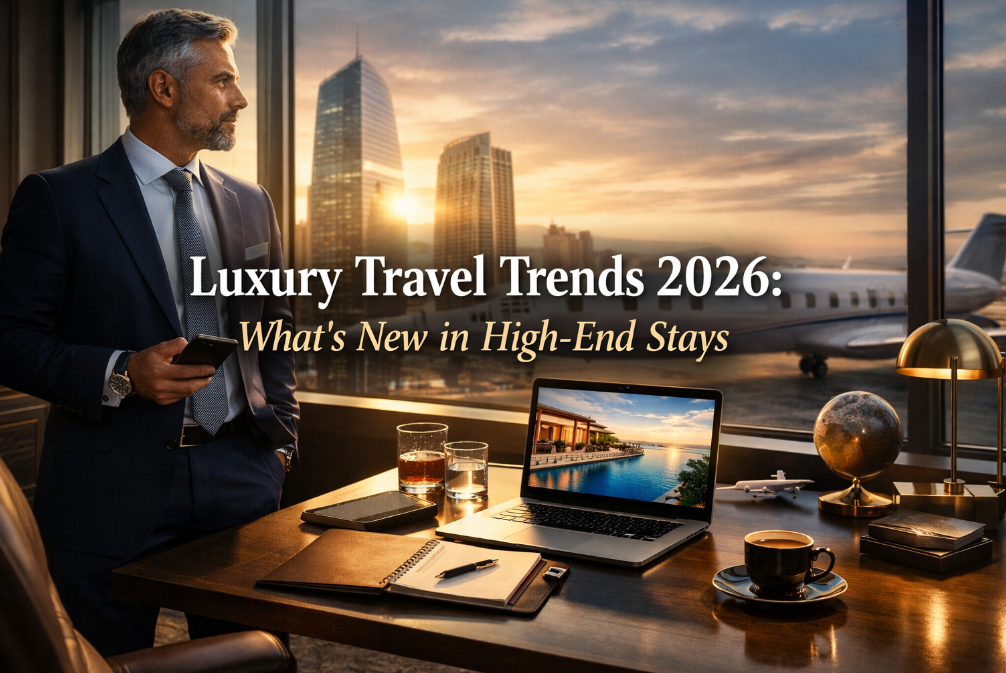
Luxury travel in 2026 feels like stepping into a world where the “wow” isn’t loud—it’s layered. Think of it like a tailored suit instead of a neon billboard. The new definition of premium travel leans into privacy, personalization, wellness, and meaningful experiences—the kind that feel exclusive because they’re designed around you, not because they’re expensive for the sake of it. If you’re planning a high-end vacation, booking a five-star resort, or comparing a luxury hotel vs private villa rental, this year’s trends matter because they shape what you’ll pay for—and what you’ll remember.
In other words: 2026 luxury hospitality isn’t trying to impress everyone. It’s trying to impress you. That’s why you’ll see premium suites designed like high-security sanctuaries, AI concierge services that feel psychic, eco-luxury design that looks richer than traditional opulence, and wellness travel programs built like a personal transformation plan. Ready to see what’s new in high-end stays? Let’s walk through the trends that are driving premium bookings, high CPC travel keywords, and luxury travel marketing right now.
The 2026 Luxury Mindset: Less “Flash,” More “Feel”
Luxury travel trends in 2026 are shifting from “look at me” to “take care of me,” and that’s a huge pivot for high-end travelers who value comfort as the ultimate status symbol. You’ll notice more quiet luxury hotels, softer color palettes, calmer lobbies, and a “private club” vibe instead of a public runway vibe. This is premium hospitality that whispers, not shouts—because when you’re paying for an ultra-luxury stay, you don’t want chaos, crowds, or constant noise. You want exclusivity that feels like slipping behind a velvet curtain where everything slows down and the world stops demanding your attention.
What’s driving this? Emotional ROI—the return on how you feel. In 2026, affluent travelers are investing in stress-free luxury vacations the way they invest in blue-chip assets: they want predictable quality, premium service consistency, and high comfort per dollar. A luxury hotel brand now competes on “how well you sleep,” “how private your arrival feels,” and “how quickly your nervous system relaxes,” not just on marble floors and rooftop pools. If old-school luxury was a trophy, 2026 luxury is a sanctuary.
Ultra-Personalized Hospitality Powered by AI Concierge
The AI concierge trend is exploding in 2026 because it solves the biggest pain point in luxury travel: wasted time. High-net-worth travelers don’t want to explain preferences repeatedly, and they definitely don’t want generic recommendations. Modern AI-powered hotel concierge systems now support preference mapping—your pillow style, ideal room temperature, dietary needs, fragrance sensitivity, wake-up schedule, favorite champagne, and even your preferred check-in vibe. Done right, it feels magical, like the hotel is reading the room before you say a word.
But the smartest luxury resorts are pairing AI precision with human warmth, because premium hospitality still needs empathy. The new gold standard looks like this: the system remembers your preferences, and the staff delivers it with grace. That combo creates high-end guest experiences that feel frictionless, premium, and personal. And yes, ethical personalization matters too—top luxury brands are increasingly highlighting data trust, privacy-first design, and transparent personalization policies because affluent travelers care about security as much as service. In 2026, personalization without privacy feels like a bad deal.
Private Villa-Resorts and “Hotel-Grade” Homes
One of the biggest luxury travel trends in 2026 is the rise of private villa resorts and “hotel-grade” luxury homes that offer five-star service with zero public exposure. Imagine a villa rental that runs like a boutique hotel: private chef, daily housekeeping, security, driver service, wellness therapist, and a dedicated host who acts like a lifestyle manager. This trend is booming because it blends exclusivity with comfort—like having your own private kingdom, but with someone else handling the crown duties.
Luxury travelers are also chasing space, especially for group trips and multi-generational vacations. A high-end villa gives you private pools, open-air lounges, ocean views, and that priceless feeling of not sharing amenities with strangers. In 2026, the best luxury villa stays compete directly with five-star resorts by adding premium touches: curated minibar pricing (no sticker shock), luxury bedding brands, spa-grade bathrooms, soundproof rooms, and seamless concierge booking. When a luxury home feels like a resort—and sometimes better—you start asking a dangerous question: why stay in a hotel at all?
Boutique Mega-Suites: Bigger, Smarter, More Private
Mega-suites are evolving in 2026, and they’re not just “bigger rooms”—they’re private ecosystems designed for high-end living. The modern luxury hotel suite now borrows from residential real estate: separate living rooms, dining spaces, work lounges, dressing rooms, spa-style bathrooms, and terraces that feel like private rooftop gardens. It’s like renting a penthouse in the sky, with room service that actually feels premium instead of transactional.
Privacy is the real luxury feature here. You’ll see discreet elevator access, private entrances, soundproofing that feels like silence on demand, and smart lighting systems designed for circadian rhythm support. Some luxury properties are even investing in scent design, acoustic engineering, and sleep-enhancement technology because the premium traveler wants peak performance, not just pretty décor. In 2026, a mega-suite isn’t a room—it’s a lifestyle product with a nightly rate.
Wellness-First Stays That Feel Like a Reset Button
Wellness travel in 2026 isn’t just spa weekends and green juice—it’s a full-body reboot disguised as a luxury vacation. The new premium wellness resorts feel like a blend of a five-star hotel, a biohacking studio, and a peaceful retreat. Expect sleep tourism, circadian-aligned lighting, recovery-focused menus, cold plunge circuits, infrared saunas, guided breathwork, and personalized wellness consultations. It’s like your body gets a software update while you’re sipping herbal tea in a robe that costs more than your first phone.
The reason this trend is so powerful is simple: luxury travelers want to come home better than they left. They’re booking longevity-focused luxury stays with IV lounges, mobility coaching, personalized supplements, and stress reduction programs that actually feel results-driven. Even classic luxury resorts are upgrading their wellness offerings with medical-grade partnerships and holistic recovery rituals. The message is clear: in 2026, wellness is not a side amenity—it’s the main event, and it sells.
Sustainability That Looks and Feels Expensive
Sustainable luxury travel in 2026 is no longer about guilt—it’s about taste. The most premium eco-luxury hotels are making sustainability look like the new version of rich: natural textures, locally sourced materials, regenerative landscaping, and architecture that blends into the destination like it belongs there. This is regenerative tourism with a five-star finish—where the property invests in the local environment, local artisans, and local supply chains while still delivering high-end comfort and luxury-level service.
Guests are also getting smarter, and the luxury market is responding with transparency. High-end travelers now expect credible sustainability practices: reduced plastic use, energy efficiency, water stewardship, and local community partnerships that feel authentic, not performative. But here’s the twist—sustainable design is often more visually luxurious than traditional luxury because it’s rarer, more thoughtful, and more bespoke. In 2026, eco-luxury doesn’t feel like compromise. It feels like elevated living.
The New Culinary Luxury: Hyper-Local, Hyper-Exclusive
Luxury dining trends in 2026 are moving toward “you had to be there” meals—hyper-local, seasonal, and exclusive in a way that feels intimate instead of intimidating. The best high-end hotels are building culinary programs like cultural experiences: chef residencies, farm-to-table collaborations, private tastings, and menus that change with the weather. Instead of importing everything, they’re investing in local ingredients and local culinary identity, which makes the meal feel more meaningful and more premium.
Private dining is also leveling up. Think hidden bars, off-menu pairings, chef’s table experiences in secret rooms, and bespoke menus built around your preferences. This isn’t just food—it’s luxury storytelling through flavor. And because luxury travel marketing loves experiences that photograph well, culinary luxury also shows up in presentation: beautiful ceramics, candlelit settings, and intentional ambience design. In 2026, the best luxury meals aren’t just delicious—they’re unforgettable content.
Experience-Stacked Stays: Hotels as Curators, Not Just Hosts
In 2026, luxury hotels are acting less like places to sleep and more like high-end curators of lifestyle experiences. You’ll see premium stays bundling exclusive access: private museum tours, behind-the-scenes fashion studio visits, closed-door wine tastings, yacht day charters, and members-only nightlife experiences. It’s like the hotel becomes your plug—the gateway to the “you can’t just book this online” layer of a destination.
This trend is especially strong in major luxury destinations where affluent travelers want status without effort. Instead of spending hours planning, they pay for a luxury stay that includes curated itineraries and elite access. The smartest luxury brands are partnering with art fairs, sports events, designer labels, and cultural institutions to create package experiences that feel rare and premium. In 2026, the hotel isn’t just a host—it’s the director of your trip’s highlight reel.
Smart Security and Privacy as a Premium Amenity
Luxury travelers in 2026 are buying privacy the way they buy comfort: intentionally and without apology. That’s why discreet check-in, private transfers, secure guest profiles, and anti-paparazzi design are rising as premium differentiators. Think hidden entrances, privacy partitions, soundproof architecture, and staff training built around discretion. High-end travelers want to feel safe, unobserved, and unbothered—because true luxury is not being interrupted.
Digital privacy is also a serious topic now. With AI concierge tools and connected rooms, hotels are investing in cybersecurity and privacy-first systems to protect affluent guests. For high CPC luxury travel keywords, privacy is a major conversion driver: “secure luxury hotels,” “private villa with security,” “discreet luxury resort,” and “VIP concierge travel” are all growing themes because travelers want premium experiences without risk. In 2026, security isn’t just protection—it’s peace of mind, and that’s priceless.
Multi-Generational and “Friends-Group” Luxury Travel
Group luxury travel is booming in 2026, and it’s changing how high-end stays are designed and sold. Multi-generational families, friend groups, and milestone celebrations want villa compounds, connecting suites, private buyouts, and flexible spaces that feel both communal and private. The modern luxury traveler wants togetherness without sacrificing comfort, which is why premium properties are investing in multi-room configurations that feel seamless.
And the services are getting smarter. Family concierge offerings now include kids’ academies, teen lounges, private tutors, adventure programming, and childcare that feels safe and premium. For group trips, luxury resorts are also focusing on shared experiences like private cooking classes, wellness sessions, and curated excursions. The goal is simple: make group travel feel effortless instead of exhausting. In 2026, high-end hospitality isn’t just for couples—it’s for everyone you’d actually want to travel with.
Destination Shifts: Where High-End Travelers Are Going
Luxury travel in 2026 is getting more strategic about destinations. High-end travelers are chasing “second-city luxury” and under-the-radar locations because crowds kill the premium vibe. Instead of only booking the obvious hotspots, affluent travelers are choosing quieter coastal towns, private islands, and less-saturated regions that still offer five-star service and elite experiences. This shift fuels exclusivity—because nothing feels luxurious like being somewhere that doesn’t feel overexposed.
Climate-aware travel is also shaping luxury itineraries through “cool-cationing,” shoulder season planning, and destination diversification. Travelers are choosing places and times that deliver better weather, fewer crowds, and better value without feeling like a downgrade. In 2026, the smartest luxury traveler books like an investor: they optimize timing, comfort, and experience quality. And that’s exactly why luxury travel planners and premium travel advisors are more relevant than ever.
Luxury Travel Spending in 2026: What’s Worth Paying For
Luxury spending in 2026 is less about discounts and more about value density—how much premium experience you get per moment. High-end travelers are willing to pay more for privacy, wellness, service quality, and unique access because those features change the entire trip. A luxury hotel that nails service consistency and personalization feels worth the nightly rate because it saves time, reduces stress, and upgrades the experience.
What’s not worth it? Fees that feel like nickel-and-diming. Luxury brands are learning that affluent travelers hate surprise charges, so premium properties are bundling value through curated add-ons: airport transfers, daily spa credits, breakfast that actually feels premium, and curated local experiences. In 2026, the best luxury pricing strategy is simple: charge more, but make it feel like you’re getting a complete product instead of a menu of upgrades.
How to Book Luxury Smarter in 2026
Booking luxury travel in 2026 is part art, part strategy. Direct booking often unlocks premium perks—room upgrades, late check-out, resort credits, and VIP treatment—especially with luxury hotel brands that reward loyalty. But premium travel advisors still matter, because they can secure hard-to-get benefits, handle special requests, and access partner-only rates that feel like invisible upgrades.
If you want to book smarter, focus on leverage: loyalty programs, elite status, and timing. Shoulder seasons often deliver better availability, better service attention, and better upgrade odds because the hotel has more flexibility. And if you’re booking luxury villas, prioritize verified service standards: housekeeping frequency, staff availability, security features, and guest support response time. In 2026, smart booking is less about price hunting and more about experience engineering.
Red Flags: How to Spot “Fake Luxury”
Fake luxury is loud, glossy, and often disappointing—because it focuses on design aesthetics while ignoring service quality. In 2026, real luxury is consistency: fast response times, thoughtful service, high-quality linens, real privacy, and a guest experience that feels calm and premium from arrival to departure. If the property’s photos look expensive but reviews mention slow service, noise issues, or poor maintenance, you’re looking at a luxury costume, not luxury reality.
To avoid booking regret, read reviews like a detective. Look for patterns around cleanliness, staff professionalism, food quality, sleep comfort, and privacy. Also check transparency: clear pricing, clear policies, and real photos across multiple sources. Luxury travel is too expensive to gamble on hype. In 2026, the best luxury stays are the ones that deliver what they promise—and do it quietly, beautifully, and consistently.
Conclusion
Luxury travel trends in 2026 prove one thing: high-end stays are becoming more personal, more private, and more wellness-driven than ever. The future of luxury hospitality isn’t just bigger suites and prettier pools—it’s AI concierge personalization, villa-style privacy, regenerative eco-luxury design, elevated culinary storytelling, and premium experiences that feel rare and curated. If you want the best luxury travel experience, aim for properties that prioritize service quality, discreet comfort, and the kind of calm that makes you forget your notifications exist. Because in 2026, the real flex isn’t being seen—it’s feeling unbelievably good.
FAQs
1) What is the biggest luxury travel trend in 2026?
The biggest luxury travel trend in 2026 is personalization with privacy—AI concierge service paired with discreet, high-touch hospitality.
2) Are luxury villas better than luxury hotels in 2026?
Luxury villas can be better for privacy and space, while luxury hotels win on service infrastructure and curated on-site experiences.
3) What does “quiet luxury” mean in luxury travel?
Quiet luxury means premium comfort without flashy branding—calm design, discreet service, privacy-focused layouts, and high-quality details.
4) Why is wellness travel growing so fast in 2026?
Wellness travel is growing because affluent travelers want recovery, sleep optimization, and longevity-focused experiences that improve how they feel.
5) How can I avoid booking “fake luxury” stays?
Avoid fake luxury by checking consistent review patterns on service, cleanliness, sleep comfort, privacy, and transparent pricing—beyond photos.
Read More